At the age of 21, my now wife bought a two-bedroom house for the princely sum of $72,000 (which at the time equated to around $200,000) that had been repossessed and looked like an opium den inside, with wiring hanging from the ceiling and mould in the bath. She then suffered a string of itinerant lodgers for years, and for half a decade it was decorated with borrowed or second-hand furniture and rugs. A perception that things were far easier for previous generations is misguided and unhelpful. I was a fair few years older when I bought my first property, and although it was very spacious and cost a lot more ($500,000), I can tell you, it most certainly was not my dream property.
It is often said that it is ‘impossible’ for young people today to get on to the property ladder. Not true. It is unquestionably difficult, but it is not impossible. We should be wary of the language that we feed to our brains, for if we tell ourselves that a goal is impossible, we will subconsciously not even attempt to achieve the goal, and we will surely fail. Firstly, it needs to be accepted that we do not buy our dream home as our first property. That has never happened for any generation, and it certainly won’t happen today. My parents’ first house, for example, cost $4,250. Two years before they bought it, they looked at one in a far superior location for $2,500 but they felt it was far too expensive (and then, of course, over the following two years values boomed). There was nothing much wrong with the house they bought, but it certainly wasn’t their dream house.
Property in Australia is unquestionably expensive, but it seems that often, my generation (Generation X) and the younger generations are totally unrealistic in their expectations of life. It appears that because someone was perhaps the clever kid in school or did well at university, they expect to walk into executive roles without doing the hard yards to get there. Often, people want to believe that because they have the title Manager or Director, which makes Mummy and Daddy proud, they have some kind of divine right to live like James Packer.
Quite simply, this is not the way of the modern world, and it was not the way of the old world either. The wealthy are those who own successful value-creating businesses, big share portfolios and multiple properties. Often, the wealth has been passed down and inherited from previous generations. Average middle managers and single-income executives on highly taxed salaries are destined for the average suburbs. They may not like it, but that is the reality? Only those people who add the most value get to own the finest houses in the best suburbs.
If you want to live like a multi-millionaire, you have to somehow add millions in value. It is very, very difficult to add millions in value as an employee, because your own time is limited, and each day you have to go back to work afresh. Your income is linear.
It is noteworthy that I have not once met an Aussie in London who planned to buy a luxury pad in Mayfair or South Kensington as their first step on to the property ladder. Not once. No, mostly they head to Earl’s Court, perhaps later relocating a step or two up the property ladder from there. The world has moved on, and Australia is no longer a poor relation to the mother country. Australia is ideally located in the Asia-Pacific region to capitalise on the growth of China and the shift in power from West to East. With the mineral wealth located on this continent, there is no reason why Australia cannot become a major economic powerhouse over the next few decades. The term ‘The Lucky Country’ was once partly used ironically; now, Australia may well truly be the lucky country.
Due to the low yields of these types of higher-end properties in Australia, it is perfectly possible to rent them for far less than it would cost you in monthly mortgage payments if you bought them. It is also possible to buy perfectly good investment properties in parts of the country for less than $100,000 with a deposit of $5,000-$10,000. We do not have to invest in the suburb, or even the state, we live in.
Others will say that they cannot afford to invest at all, but we can start investing in shares with as little as a couple of thousand dollars. Indeed, we can begin investing with even less than that. We can take an evening job to earn some extra dollars. I used to wash dishes, and then when I was old enough I worked as a barman, and then I worked for 12 months in a timber yard, before returning in my university holidays to push timber through a machine on and off for a further three years. Warren Buffett was once a paper boy who ran multiple rounds and began investing the proceeds.
If you are not prepared to entertain the idea of a couple of extra shifts, then this may be an indication that this is not the plan for you. Every investor started somewhere. Success involves some sacrifice, and nothing that is worth having comes easily. The key is to associate pleasure with the achievement of saving towards your goal, and pain with frivolous spending on unnecessary items.
How about gym membership and personal trainers? This is a cost we can easily save on if we want to. During my travels, I discovered that by buying a resistance band and a kettlebell for $100 and using the power of focus in my exercise and nutrition, I can achieve just as good a physique in just fifteen minutes of exercise per day as I ever obtained from spending many hundreds of hours in the gym.
For cardiovascular exercise, if you live in the outer suburbs or the regions, you are lucky you have the great outdoors as your gym. A brisk walk is the most wonderful exercise you can do, better Still if you have a mate or partner to walk with; you can have meaningful conversations that rarely seem to happen in front of a television. lf you live in the inner suburbs of a city, try drawing a 10 km radius around your house on a map and power-walk to some suburbs you might like to invest in. My wife and I have done this for the last seven years. If at first your friends think you have lost the plot, I can guarantee you they will have a different reaction when you tell them you have just bought your tenth property.
Another thing I hear people say is that they do not have time to invest, but we all have 24 hours in a day and seven days in a week, Richard Branson, Bill Gates and George Soros included, so by definition that cannot be true. What this statement really means is that they are prioritising other activities over investing. If that is the case, then that is fine, but it is definitely not the same thing as not having the time to invest.
Set yourself a decent period of time for saving investment capital. People often underestimate what they can achieve because they want results instantly and do not allow themselves time to succeed. If you can save $500 in a month, then over three years you will have saved $18,000 in capital, and if it has been invested wisely, this will have increased in value to significantly more. The government has introduced a savings account scheme for First home buyers whereby the government will add contributions to your account and tax income at a low rate.
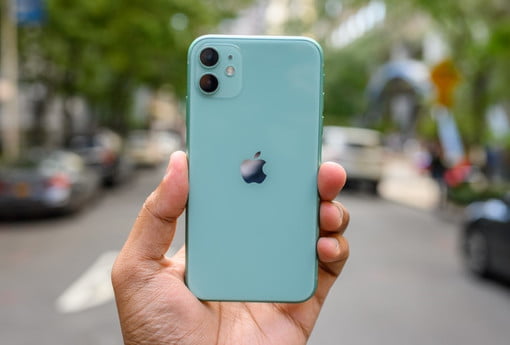
I don’t need to insult your intelligence by writing a long list of items, from cosmetics to coffee to Chinese food, on which you can cut down expenditure. Using common sense and identifying where your extravagant expenditure lies should be enough. I’m going to mention one major bugbear of mine, though iPhones.
I often hear people complain that it is impossible to save for a home deposit, but when I ask them what kind of iPhone bill they receive, it is invariably more than $300 a month. That is $3,600 a year coming straight out of their after-tax salary. When I suggest that they use a $29 cap with a basic phone (as I still do), they insist that is not a possibility. At this point, sympathy evaporates. What we are then discussing is not an inability to save towards a home deposit, but a prioritising of mobile phone status over taking responsibility for your financial future. That’s a different discussion. Not interested, sorry!
 JJJ's money saving ideas